

If your Instagram dinner photos are never post worthy, the culprit isn’t you or the camera, it’s the bulb overhead. Adding proper lighting to the recipe doesn’t just help you see your food better, it plays a role in how fresh, flavorful, and appetizing it presents.
In This Blog, You’ll Discover…
→ The evolution of food lighting
→ How brightness, color temperature, and color-rendering index (CRI) directly affect food
→ Research on which color temperature works best for what foods
→ A practical checklist you can use to improve your lighting

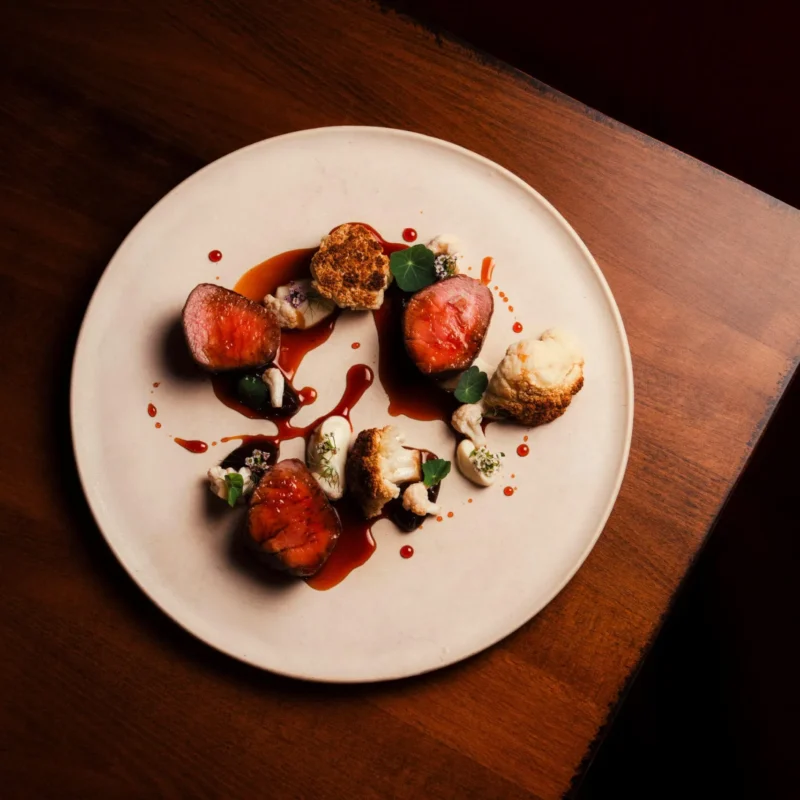
A Bite-Sized History of Food & Light
In the early restaurant days owners often didn’t put much thought into or have much choice with their lighting. Restaurants at the time would simply use incandescent bulbs, casting a warm amber tone. Then fluorescent and LED technology arrived.
Suddenly, lighting gained new depth and meaning, making it a strategic tool. Retailers discovered that tunable color temperatures and high-CRI phosphors could make red meat redder and greens greener, directly influencing sales.
The Illuminating Engineering Society (IES) now offers entire guides on “merchandise-driven” lighting for produce aisles and buffets, underscoring how far we’ve come from one-bulb-fits-all thinking. store.ies.org
The Science Behind Tasteful Lighting
1. Color Temperature Cues Freshness
Color temperature, measured in Kelvins, changes the emotional tone of food.
- Warm Whites (2700K – 3000K): Flattering for steak, bread, pasta, and other similar comfort foods. Warm whites add richness and depth to these foods.
- Neutral Whites (3500K – 4100K): Great for keeping colors balanced and clean especially in salads, produce, and prep areas.
- Daylight Tones (>5000K): Accents and enhances fish, glossy pastries, and high-detail presentation. In the right setting it is clean and effective but too harsh if not used properly.
A recent hospitality study found that diners served under 3000K lighting rated entrées as more visually appealing than the same dishes under cooler blue light. sciencedirect.com
2. CRI May Reveal Or Conceal True Color
CRI measures how accurately a light reveals true color compared to natural sunlight.
The higher the CRI, the closer artificial light matches sunlight’s full spectrum. A high-CRI LED lets you notice the deep marbling in a rib-eye or the vibrant orange of carrots. Poor CRI can gray-out reds and mute greens, reducing perceived freshness and even altering flavor expectation, according to sensory researchers. frontiersin.org
3. Brightness Balances Safety and Appetite
Lighting can be both functional and aesthetic.
U.S. food codes require specific light levels, 220 lux over buffets and 540 lux where staff handles knives, so workers can spot spoilage and avoid accidents. earthtronics.com But dimmer, warmer accent lights at dining tables encourage guests to linger and maybe even order dessert. This highlights that illumination is both a safety tool and a mood setter.
✴ One lux equals one lumen per square meter (lm/m²)
4. How Hue Influences Hunger
Studies manipulating colored LEDs found that bluish illumination decreased both the attractiveness of food and the amount participants ate. On the other hand, warm white boosted consumption, especially among men. sciencedirect.com

A Food Lighting Checklist
✓ Select LEDs with CRI 90+ for food applications
✓ Align color temperature with the emotional tone of the food
✓ Layer task, ambient, and accent lighting
✓ Use smart or tunable fixtures for ease and flexibility in multipurpose spaces
The Secret Ingredient In Action
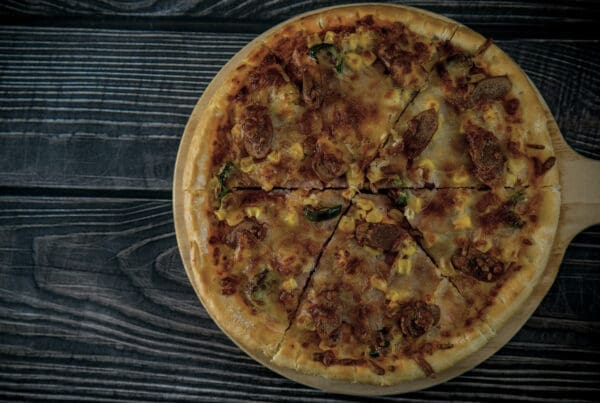

Both are pizzas with similar ingredients but the game changer is the lighting. One looks dull and unappetizing while the other is vibrant, golden, and irresistible.
Choose EmeryAllen bulbs so you can ensure your pizza, and all other foods, will look as incredible as they taste.
Final Bite
Lighting can be your new secret ingredient! It shapes people’s taste perceptions, enhances the color accuracy, and sets the mood for the room. By zoning temperatures, choosing certified high-CRI products, and embracing tunable LED technology, you’ll plate meals that look as appetizing as they taste, and both your guests and camera will notice the difference.
✴ Food Photography Courtesy of Paul Chelmis : Photographer & Videographer Based in Charleston, SC